Elders’ Intellectual Pursuits
We are continually learning about the wonders of the brain, its ability to programme our bodies, adjudicate on complex situations, and indeed, look after our wellbeing.
The Elders interviewed by Dr G were pursuing many and varied interests to stimulate their brain and provide a further purpose in their life. These interests, or intellectual pursuits, included reading, music, and learning or speaking another language, just to mention a few. Some Elders were pursuing a multitude of different intellectual interests.
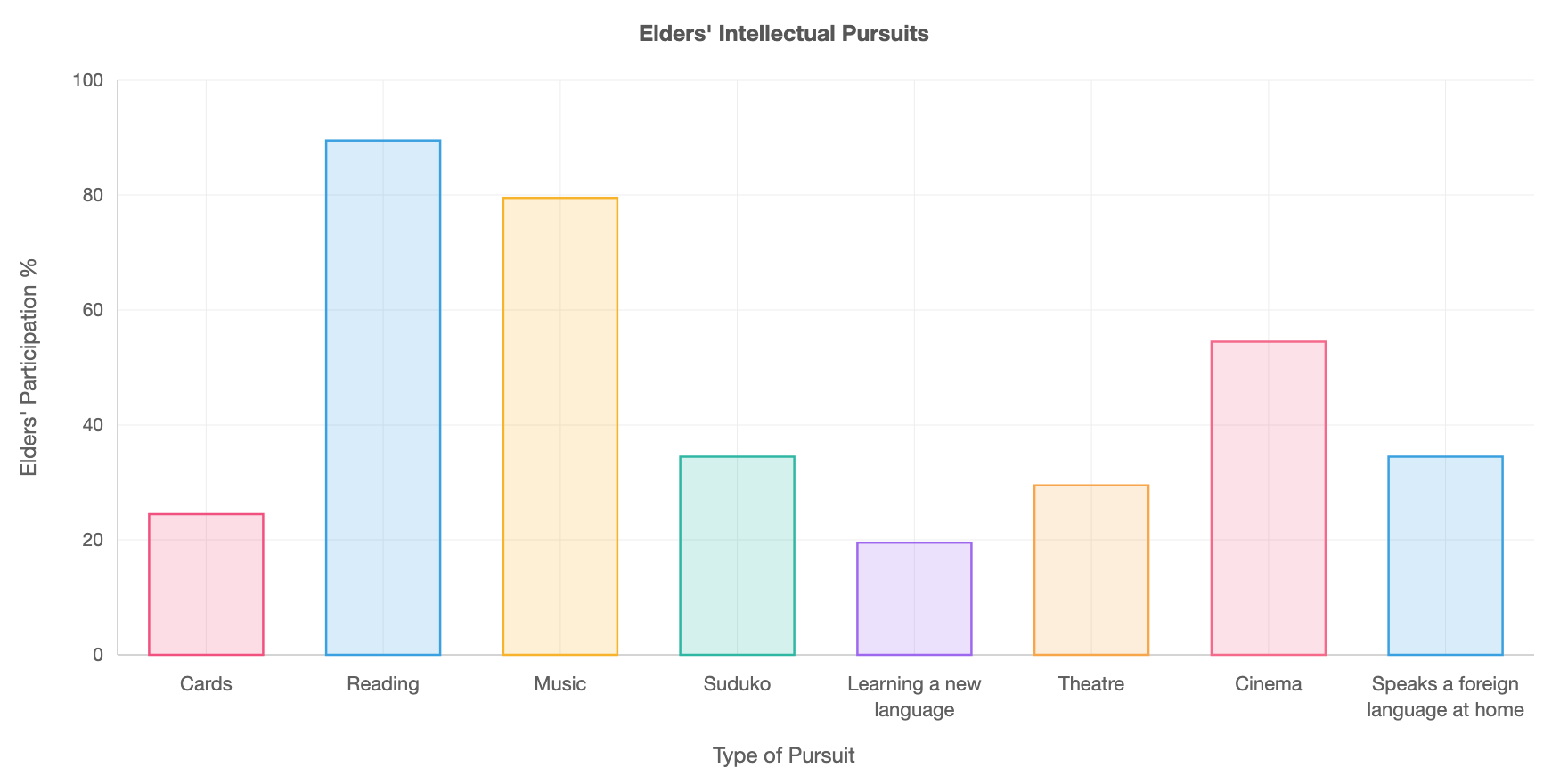
Elders’ Intellectual Pursuits
Source: Dr. Gary Shiels
The brain is continually striving for things to do. The more challenged it is, the better it functions. However, the converse is also true. The less our brains are challenged, the more idle they are, the less match-fit they become, and their ability to function is reduced. This is particularly the case when people retire from work and their daily scheduled tasks no longer exist. The short-term memory or hippocampus is less able to store names, events, and other things we rely on each day.
Accordingly, as we age, we need to continue to exercise our brains as well as the rest of our body. Exercise helps to flush blood through the brain, which is fundamentally and functionally a good thing.
However, we also need to stimulate the brain with tasks, which might include crossword puzzles, sudoku, bridge, and other activities that challenge the mind. Learning a foreign language or a musical instrument is challenging at any time and more challenging for older people. However, learning a new skill, as the Elders have showed us, is a strong intellectual pursuit that stimulates the brain and can give a lot of pleasure. Brain training is not something that we should start late in life or in retirement. Rather, Dr G suggests the term, lifetime learning, which is the process whereby we are continually pursuing new activities that challenge our intellectual parameters.
In summary, when we think about successful ageing, intellectual pursuits for the brain are essential. If we have adopted the approach of lifetime learning, then we are familiar with different intellectual challenges. When you stop full-time work, it is essential that you identify intellectual challenges that you enjoy and pursue them with a friend. There are numerous activities to choose from, you just need to decide to pursue them.